
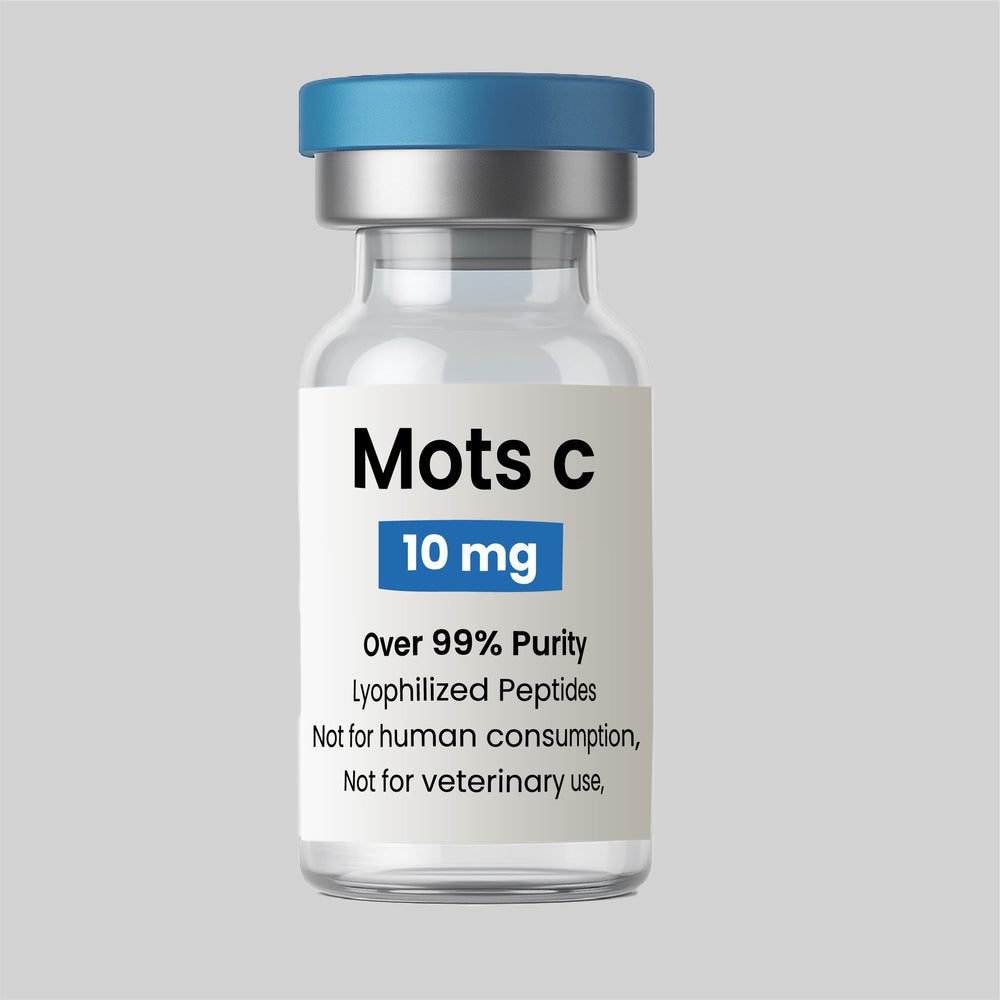


What You Should Know About MOTS-c
MOTS-c (Mitochondrial Open Reading Frame of the 12S rRNA type-c) is a 16-amino-acid peptide encoded by the human mitochondrial genome. First identified in 2015, it belongs to a distinct group of mitochondrial-derived peptides (MDPs), acting as signaling molecules from mitochondria to the cell nucleus. Research indicates that MOTS-c participates in pathways associated with cellular energy balance and stress responses. The human peptide sequence (MRWQEMGYIFYPRKLR) is commonly referred to as MOTS-c Human and has been studied to understand metabolism, insulin-related pathways, and age-associated cellular processes. Unlike classical hormones, MOTS-c is synthesized in mitochondria, representing an alternative mechanism of intracellular communication.
Biological Origin and Expression
MOTS-c is translated from a short open reading frame (sORF) within the 12S rRNA region of human mitochondrial DNA, making it one of the few peptides produced directly from mitochondrial DNA. Its expression is influenced by cellular energy requirements and stress conditions. MOTS-c is present in multiple tissues, including skeletal muscle, cardiac tissue, neural tissue, and plasma. Circulating levels increase transiently after physical activity, with tissue-specific patterns observed. Higher levels are found in active muscle, while sedentary or older individuals show lower levels. Endogenous MOTS-c decreases with age, reflecting changes in mitochondrial and metabolic function.
Mechanism of Action
MOTS-c modulates cellular function primarily through the AMP-activated protein kinase (AMPK) pathway, a central regulator of energy homeostasis. Under metabolic stress, the peptide can translocate to the nucleus to regulate genes involved in glucose and lipid metabolism. Key actions include:
- Activation of the folate-polyamine-AICAR pathway, triggering AMPK signaling independently of cellular energy depletion
- Enhanced glucose uptake in skeletal muscle via GLUT4 translocation, resembling insulin-responsive metabolic pathways
- Interaction with nuclear transcription factors to support antioxidant defense and control of inflammatory pathways
Through these mechanisms, MOTS-c functions as a mitochondria-to-nucleus messenger, facilitating cellular adaptation to energy demands and oxidative stress.
Areas of Scientific Research
MOTS-c has emerged as a significant focus of metabolic and cellular research. Identified as a signaling molecule encoded by mitochondrial DNA, it represents a distinct class of peptides involved in communication between mitochondria and the nucleus. Ongoing studies explore its role in energy regulation, stress adaptation, and age-associated metabolic processes.
Metabolic Regulation and Insulin Sensitivity
MOTS-c has been studied in preclinical models of metabolic disorders, including obesity and type 2 diabetes. Research shows that MOTS-c improves insulin sensitivity, reduces lipid accumulation, and enhances glucose utilization. Chronic exposure produces metabolic adaptations similar to those observed under caloric restriction, including reduced body weight and improved metabolic markers, without changes in caloric intake.
Aging and Longevity
Endogenous MOTS-c levels decline with age, corresponding with alterations in mitochondrial activity and energy regulation. Preclinical studies suggest that higher MOTS-c signaling supports cellular stress resilience, modulates inflammation, and promotes mitochondrial maintenance. Animal models show potential for mitigating age-related decline in muscle, neural, and other tissues.
Exercise Mimetic and Cellular Adaptation Effects
MOTS-c levels increase following physical activity, indicating responsiveness to metabolic demand. Preclinical studies demonstrate enhanced fatty acid utilization, improved energy efficiency, and cellular resilience under stress conditions, including oxidative or thermal challenges, mimicking exercise- or calorie restriction-induced adaptive responses.
Scientific Significance and Potential Implications
MOTS-c represents a novel mechanism of mitochondrial-to-nuclear signaling. As an endogenous peptide responsive to exercise and nutrient cues, it regulates pathways involved in energy homeostasis and cellular adaptation. Synthetic analogs are under investigation in research contexts. While human studies are limited, preclinical findings underscore the importance of mitochondrial signaling in metabolism, aging, and stress adaptation.
Intended Research Use
MOTS-c Human is provided strictly for laboratory and research use. It is not intended for human consumption, diagnostic procedures, or therapeutic applications. The peptide is supplied as a lyophilized powder for in vitro experiments or animal studies.
Storage and Handling
Store at −20 °C or below in a dry, desiccated environment. Reconstitute in sterile water or an appropriate buffer immediately before use. Avoid repeated freeze-thaw cycles and handle under aseptic conditions to preserve stability.
Regulatory and Safety Disclaimer
The FDA or other regulatory agencies do not approve this product for medical use. All research must comply with local laws and institutional ethical guidelines. Potential effects outside controlled research settings are unknown; consult scientific literature for detailed handling and safety precautions.
| MOTS-c | 5mg*10vials, 10mg*10vials |
|---|
Be the first to review “MOTS-c”
Related products

All Peptides

All Peptides

All Peptides

All Peptides

5-amino-1mq

All Peptides

All Peptides

All Peptides
Reviews
There are no reviews yet.