
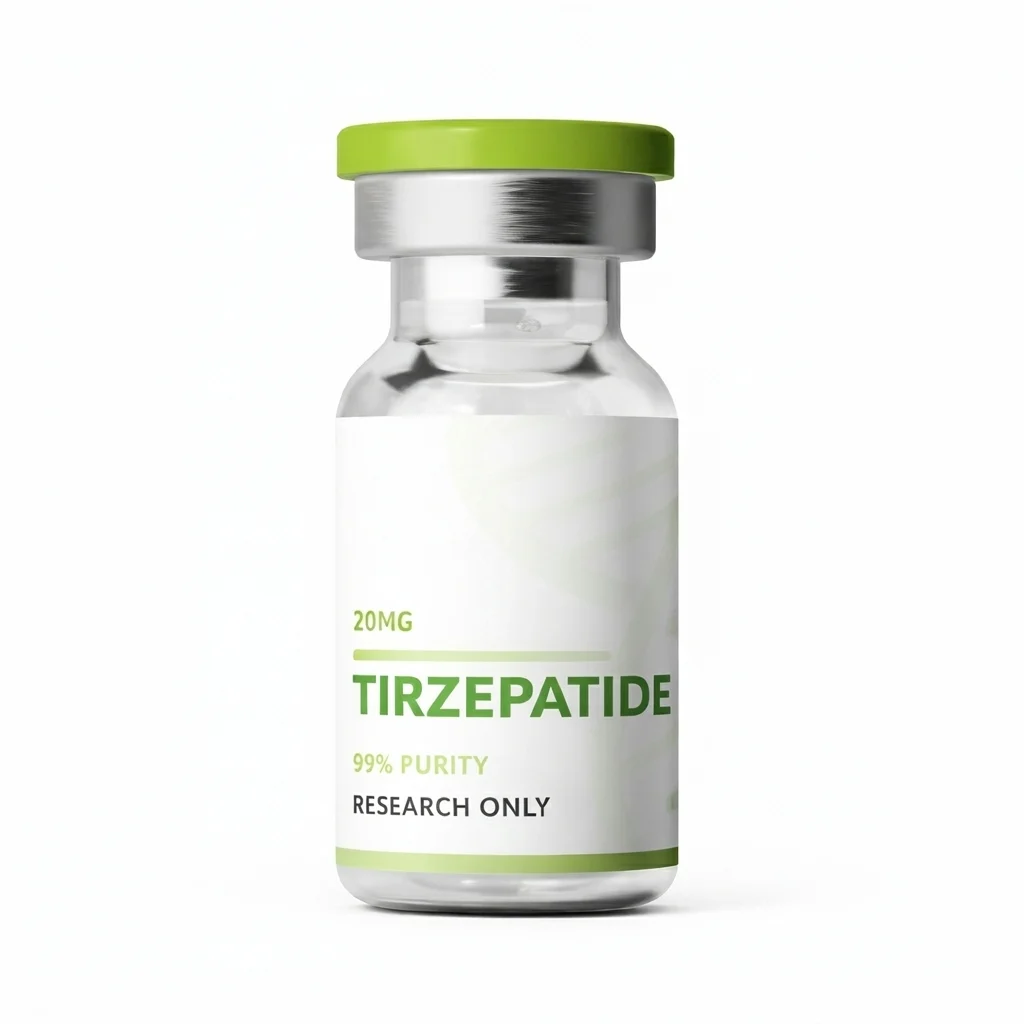
What is Tirzepatide?
Tirzepatide is a synthetic peptide developed for laboratory and scientific research. It is studied for its interaction with biological pathways controlling energy, metabolic signaling, and recovery in controlled experiments. The peptide is made with a specific amino acid sequence so that it is stable and consistent for research use. Its formulation promotes structured investigation and repeatable observations in different experimental models. Tirzepatide is available in doses of 5 mg, 10 mg, and 15 mg, enabling researchers to choose a suitable quantity depending on the study and analytical requirements. All quantities are designed to support accuracy and reliability in research environments. This product is for research purposes only and is not approved for human or veterinary use.
What is Tirzepatide 5MG?
Tirzepatide 5 milligrams is the lowest research quantity, commonly used in preliminary studies or baseline evaluations. It allows researchers to observe how the peptide behaves under controlled conditions without exceeding a conservative reference level. This dose is typically applied in preliminary studies, side-by-side evaluations, or extended observation setups where controlled assessment is required. Tirzepatide 5MG supports stable testing environments under strict observation. Research using this dosage has investigated its role in energy-related signaling and metabolic response patterns under laboratory conditions.
Structural Composition of Tirzepatide
Tirzepatide has a short, defined sequence of amino acids designed for stability during laboratory handling. Its molecular structure remains stable when stored and handled according to recommended research conditions. The peptide is easy to work with and follows standard lab practices. Its straightforward structure allows studies to focus on biological effects with minimal setup.
What is Tirzepatide Research?
Tirzepatide research focuses on examining this peptide in controlled laboratory studies. Researchers investigate how it interacts with biological pathways involved in energy signaling, metabolic regulation, and recovery-related processes. Different quantities (5MG, 10MG, and 15MG) are tested to observe how exposure levels may influence pathway activity. Observations are made under standardized experimental conditions to ensure consistency and repeatability. These studies aim to identify trends and potential interactions rather than make clinical or therapeutic claims. All research is conducted in laboratory settings following proper protocols. Tirzepatide is intended solely for scientific investigation and is not approved for human or veterinary use.
Tirzepatide and Daily Energy Related Pathways
In lab studies, Tirzepatide is tested for correlations with pathways involved in energy signaling and utilization. Observations monitor the response of biological systems to peptide exposure over time. Different research quantities allow evaluation of response patterns under standardized conditions. These investigations are intended to detect trends, not definitive outcomes.
Tirzepatide and Metabolic Pathway Activities
Tirzepatide is applied in experiments studying metabolic signaling. Researchers examine its potential interaction with pathways affecting energy efficiency and regulation. Comparative analyses across multiple conditions help understand variations in responses relative to peptide exposure. Findings are experimental and observational.
Tirzepatide and Recovery Process
Research applications include evaluating pathways related to system recovery and adaptation following experimental stress. Studies observe how biological systems stabilize and respond under controlled conditions. Dose selection depends on the research scope, duration, and objectives.
Choosing the Right Tirzepatide Strength
Tirzepatide comes in 5mg, 10mg, and 15mg doses to support different research goals. Lower doses are typically used in initial studies, while higher doses are applied in advanced or extended protocols. Each option ensures consistency, accuracy, and reliability in research.
How to Store and Handle Tirzepatide Safely
Tirzepatide should be stored in a cool, dry area, protected from direct light and moisture. Contamination should be avoided by using clean tools and following standard laboratory practices. All samples should be handled and stored under these recommended conditions.
Intended Research Use & Disclaimer
Tirzepatide is provided solely for laboratory and scientific research use. It is not for human or veterinary use and is not approved for clinical, therapeutic, or diagnostic applications. Any references to potential activity are based on experimental observations and do not indicate medical efficacy. Use the peptide according to all laboratory safety regulations and guidelines.
Referenced Citation
- Tirzepatide vs. semaglutide: clinical decision-making in the GLP-1 landscape
- Tirzepatide Versus Semaglutide on Weight Loss in Type 2 Diabetes Patients: A Systematic Review and Meta-Analysis of Direct Comparative Studies
- Tirzepatide: A Systematic Update
- Efficacy and safety of tirzepatide, dual GLP-1/GIP receptor agonists, in the management of type 2 diabetes: a systematic review and meta-analysis of randomized controlled trials
- Tirzepatide, a dual GIP/GLP-1 receptor agonist, alleviates metabolic dysfunction-associated steatotic liver disease by reducing the expression of CD36 and OBP2A
| Tirzepatide | 2mg*10vials, 5mg*10vials, 10mg*10vials, 15mg*10vials, 20mg*10vials, 30mg *10vials, 40mg*10vials, 50mg*10vials, 60mg *10vials |
|---|
Be the first to review “Tirzepatide (GLP-1/GIP)”
Related products

All Peptides
All Peptides

All Peptides

All Peptides
5-amino-1mq
All Peptides

All Peptides

All Peptides
Reviews
There are no reviews yet.