Overview
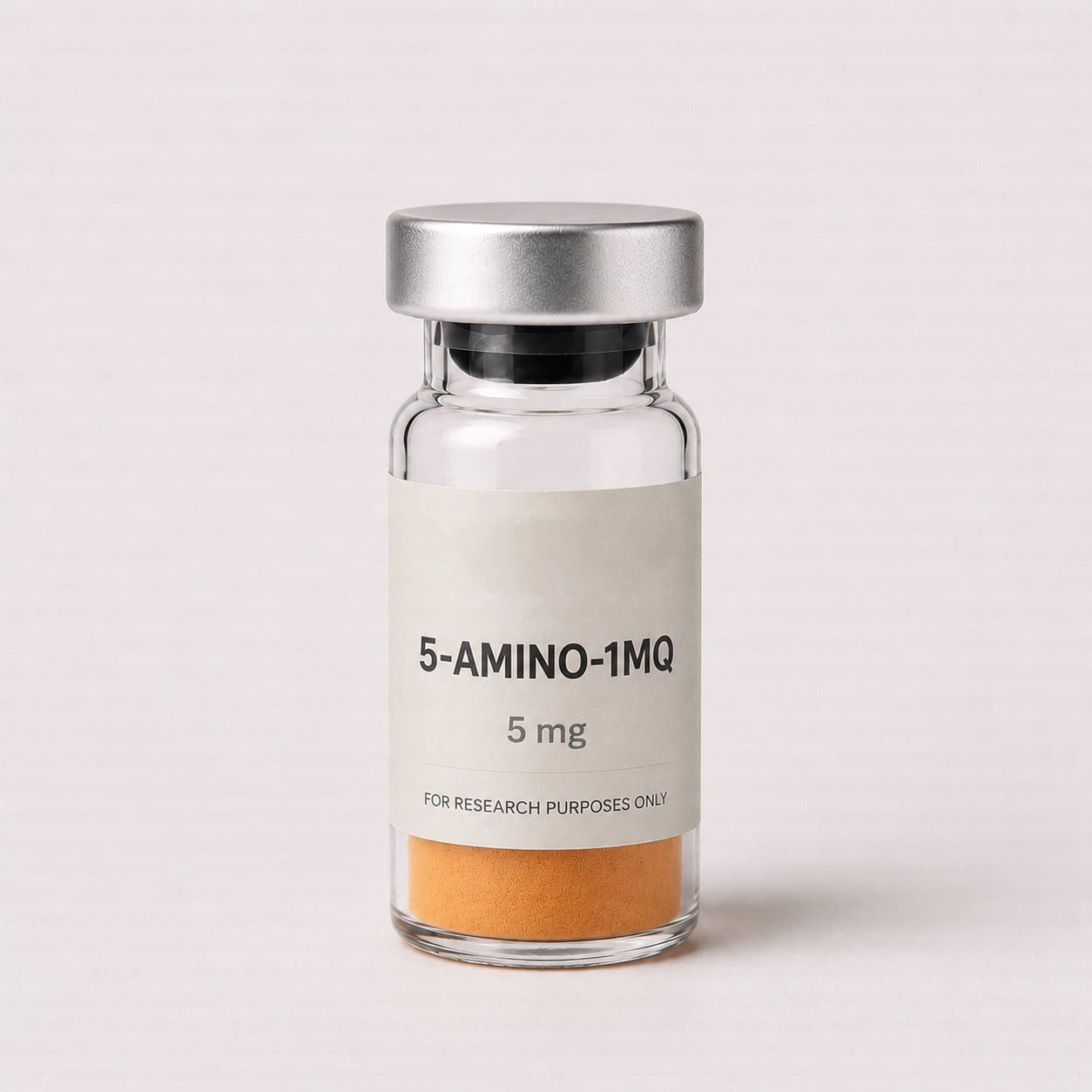
5-Amino-1MQ is a synthetic small-molecule compound supplied for laboratory research. It is not a peptide. This compound is commonly studied in connection with the enzyme nicotinamide N-methyltransferase (NNMT). NNMT is an enzyme present in many tissues and cell types. It converts nicotinamide into methylated products using methyl groups, influencing how nicotinamide is processed inside the cell. Because NNMT is involved in basic metabolic processes, 5-Amino-1MQ is often used as a research tool to reduce NNMT activity in controlled experimental systems. It is intended strictly for laboratory research and is not approved for use in humans or animals.
Biochemical Characteristics
5-Amino-1MQ is a low molecular weight compound designed for experimental use. Its structure allows it to interact with the active site of NNMT. In research settings, this interaction limits the enzyme’s normal function. NNMT normally methylates nicotinamide, consuming methyl donors and producing methylated nicotinamide derivatives. These reactions are part of normal cellular metabolism. When NNMT activity is reduced in research models, changes can be observed in related biochemical processes. 5-Amino-1MQ allows researchers to study these effects at the enzyme and cellular levels under laboratory conditions.
Research Applications
5-Amino-1MQ is provided for laboratory research and is not intended as a drug, treatment, or supplement. It is used exclusively in experimental work. In research labs, it is mainly used to study NNMT activity, including inhibition experiments and enzyme activity assays. It is also applied in metabolic pathway studies and routine cell culture experiments. Some preclinical models include this compound in broader metabolic research. The compound is typically added to experimental systems to observe how reduced NNMT activity alters cellular behavior over time. Outcomes depend on the experimental model, dosage, and study design.
Mechanistic and Pathway Context
NNMT is involved in cellular nicotinamide processing and methylation reactions. Reduction of NNMT activity in research models may lead to observable changes in nicotinamide metabolism, methyl group utilization, and downstream cell signaling. 5-Amino-1MQ is generally used to examine these processes under controlled laboratory conditions to improve understanding of basic cellular mechanisms. It is not intended to study therapeutic outcomes.
Preclinical Research Summary
Published studies report observations of 5-Amino-1MQ in early laboratory and animal experiments. These preclinical models examine metabolism, gene expression, and tissue signaling influenced by NNMT activity. Experiments often involve rodent or cell-based systems and measure metabolic flux, markers in adipose and muscle tissues, and transcription patterns affected by NNMT activity.
Disclaimer
5-Amino-1MQ is intended only for laboratory research. It is not approved for human or animal use, therapeutic applications, or supplementation. All research must comply with institutional and regulatory guidelines.
Referenced Citations
- Kraus D, et al. Selective and membrane-permeable small molecule inhibitors of nicotinamide N-methyltransferase reverse high-fat diet-induced obesity in mice.
- JoAnne J Babula Nicotinamide N-methyltransferase inhibition mitigates obesity-related metabolic dysfunction. PubMed 39161060; 2024.
- Serra Akara et al. Small molecule inhibitor of nicotinamide N-methyltransferase shows anti-proliferative activity in HeLa cells. PubMed 33645410; 2021.
Be the first to review “5 Amino 1MQ”
Related products
All Peptides
All Peptides
All Peptides
All Peptides
All Peptides
All Peptides
All Peptides
All Peptides
Reviews
There are no reviews yet.